Scrivener vs Ulysses for Writers
Scrivener suits complex projects; Ulysses rewards simplicity and wallet.
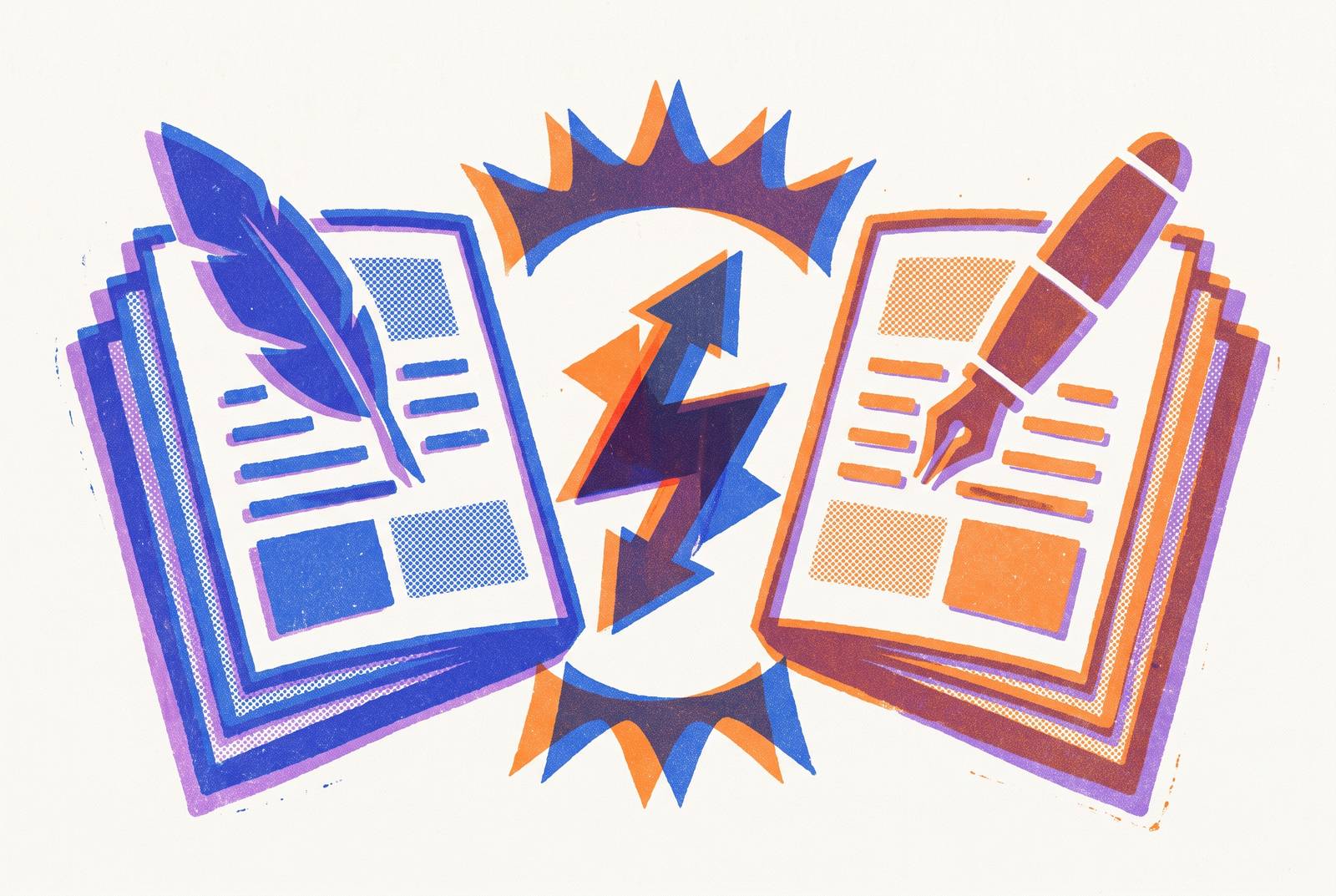
Scrivener and Ulysses solve the same problem in opposite ways, and only one of them is actually right for most of the writers asking this question. Scrivener gives you a filing cabinet, a corkboard, and a research library bolted onto a word processor. Ulysses gives you a blank page and hides everything else until asked. If the project fits on a blog or in a single linear draft, and it drags out past a year of use, Ulysses is the better bet financially and mentally. Scrivener earns its keep only when the project is genuinely large and tangled enough to need a project manager, not just a text editor.
What each app costs, and what happens when you stop paying
Scrivener charges once. macOS and Windows licenses run $59.99 each, with the iOS version adding another $23.99 if a writer wants it on a phone or iPad. No subscription, no recurring charge, no countdown clock ticking down to a paywall. The 30-day free trial is unusually generous in practice, too: Literature & Latte counts only days the app is actually opened, not calendar days, so someone who opens it for twenty minutes every few days can stretch evaluation into weeks.
Ulysses runs on a subscription: $49.99 a year or $5.99 a month, with a 7-day free trial (some sources list an older $39.99 annual rate, worth double-checking on ulysses.app before committing to anything). Do the arithmetic and the gap widens fast. By year two, a Ulysses subscriber has paid $79.98, already more than Scrivener's entire one-time price. By year five it's $199.95 against Scrivener's flat $59.99. Stretch that to ten years and the difference reaches $339.91.
Here's the part that actually changes behavior, not just the sticker price: let a Ulysses subscription lapse and the app goes read-only. Nothing gets deleted, everything stays exportable, but editing a single word requires resubscribing first. That's standard for metered software, but it means Ulysses is a rental on your own sentences in a way Scrivener never is. Anyone drafting something they might set aside for a year, a novel that stalls, a thesis on hold, should sit with that fact before signing up.
Both apps offer student and academic discounts, and Ulysses is also bundled into Setapp's flat monthly membership alongside more than 260 other Mac and iOS apps, which matters mainly to writers already paying for that bundle for other reasons.
Platform availability as a deciding constraint before features enter the picture
Before any feature comparison matters, there's a gate, and it eliminates one of these apps for a large share of writers before they've even opened either one.
Ulysses runs on macOS, iOS, and iPadOS. That's the entire list. No Windows build, no Android version, no workaround involving a virtual machine or a prayer. Scrivener covers more ground: macOS, Windows, and iOS, though not Android, and an earlier Linux beta was abandoned along the way. For anyone on a Windows machine, the decision is already made, and made for you. Scrivener is the only door that opens.
An estimate from popi.ai, based on aggregated user reports from December 2025, puts the share of writers excluded from Ulysses on platform grounds alone somewhere between 30 and 40 percent, before a single interface comparison enters the conversation. Treat that as a rough read of who's even eligible to choose, not a controlled study. Android users get nothing from either app and need to look elsewhere entirely; that's just how the market has shaken out.
For writers fully inside the Apple ecosystem, though, this same restriction cuts the other way. Ulysses syncs across Mac, iPhone, and iPad through iCloud with almost no setup. Scrivener on iOS requires deliberate sync discipline in a way that iCloud-native apps mostly spare their users from (more on that below). So platform isn't really a filter sitting outside the feature comparison. It is the first feature comparison, just one that happens to eliminate an entire app for some readers before the rest of this piece is even relevant to them.
How Scrivener's interface reflects its theory of writing as project management
Open Scrivener for the first time and it greets you with toolbars, a customizable sidebar, and menus stacked on menus. Nothing is hidden. Everything sits one click away, whether it's needed in the next five minutes or the next five months.
The center of that design is the Binder, a nested folder tree holding every piece of a project. Chapters, scenes, character sketches, interview notes, and research documents all sit in the same structure, visible and reorderable at will. Switch to Corkboard view and each document becomes an index card that can be dragged around like a whiteboard exercise, genuinely useful for a novelist trying to see whether a sagging middle section actually holds together. Switch to Outliner view and the same material appears as a traditional hierarchical list. Scrivenings mode does something else entirely: it stitches individual documents into one continuous scroll, so fifteen scattered scenes read as if they were already a finished chapter.
Split-screen lets two documents sit side by side, handy for checking that Chapter 12's tone matches Chapter 2's, or for keeping a research PDF open while drafting the scene it feeds. Snapshots work like version control for a single section: take one before a risky revision, and the earlier draft stays recoverable no matter how badly the rewrite goes sideways. A dedicated research folder holds text, images, PDFs, and other files inside the project itself, so a screenwriter's location-scouting photos or an academic's source PDFs never need a separate app to live in.
All of that adds up to real capability, and real cost. The Scrivener manual runs 905 pages. Paid courses, some priced at $100 or more, exist purely to teach people how to use software that's supposedly there to help them write, which is a strange sentence to have to type but an accurate one. An estimate from popi.ai (December 2025, again not a formal study) suggests something like 40% of new users abandon the app before becoming proficient in it. Scrivener was built on the belief that big, structurally tangled projects need dedicated tools, not a stripped-down text box, making the complexity the central tradeoff of the whole program rather than a bug to be patched out in a future update. Whether it's the point for any particular writer is a separate question, and for a lot of writers the honest answer is no.
How Ulysses' interface reflects its theory of writing as a flow state to protect
Open Ulysses and the contrast lands immediately. Instead of a project dashboard, there's a library, a sidebar of groups and folders, and a central editor with almost nothing else on screen. Formatting doesn't happen through a toolbar, it happens through Markdown typed directly into the text: asterisks for bold, pound signs for headers, brackets for links. The controls exist, tucked out of sight until you go looking, but the working surface stays as close to a blank page as software gets.
Individual documents, called sheets, live inside hierarchical folders and can be dragged around or tagged much like Scrivener's Binder items, minus the corkboard visualization on top. One genuinely distinctive feature: keywords attached to a sheet can convert into matching tags or categories when a writer publishes to WordPress or Ghost. CMS publishing built into the drafting workflow itself, rather than bolted on afterward through export, stands as the single feature Scrivener has no real answer for. A split view with live preview shows how a piece will look in its destination format, whether that's a paperback manuscript, a newsletter, or a digital magazine layout. A built-in proofreading and editing assistant covers more than 20 languages.
The one real toll charged at the door is Markdown itself. Most writers pick up the basic syntax in a session or two, though anyone who strongly prefers seeing bold text rendered bold, rather than flanked by two asterisks like a redacted word in a spy memo, may find that friction never fully disappears. Fair enough: not every writer wants to type formatting instructions to their own document like it's a stage direction in a screenplay.
Put the two apps' opening screens side by side and the philosophical split turns almost comically literal. Scrivener opens to a dashboard built for running an operation. Ulysses opens to a page built for one thing only: writing on it.
Organization and research depth: where the gap between the apps becomes concrete
This is where the abstract philosophy talk turns into something a writer can actually feel with their hands on the keyboard.
Scrivener's research folder holds text, images, PDFs, and multimedia inside the project file itself, so a novelist's character bible, a journalist's interview transcripts, and an academic's source documents all sit beside the draft they inform. Ulysses has no equivalent built-in research folder, a real limitation for research-heavy work, though it offers ways to attach notes, images, and PDFs alongside sheets, just without Scrivener's dedicated filing structure wrapped around them.
Scrivener also offers three distinct ways to view the same manuscript: Corkboard for spatial rearranging, Outliner for hierarchy, and Scrivenings for stitching documents into a continuous combined view. Ulysses' folder and keyword system, by contrast, is fast and flexible but entirely text-based. No corkboard, no spatial map of the project sitting apart from the words themselves.
This tends to map onto the old pantser-versus-plotter split. Scrivener rewards the plotter who wants to outline, rearrange, and restructure obsessively before committing to a scene. Ulysses rewards the writer who drafts more or less linearly and wants the manuscript in front of them, not a project map competing for attention. One recurring complaint captures the risk sitting on Scrivener's side of the ledger: "I spent more time organizing than writing." The tools are powerful enough to become their own form of procrastination, dressed up as productivity, for a writer who never needed that much structural scaffolding in the first place.
In practice, one system genuinely does more work than the other, and the deciding factor is whether the project needs that capability at all. A novelist juggling six plot threads across three viewpoint characters, an academic managing a few hundred citations, or a screenwriter working in industry-standard format all have a real case for Scrivener's depth. A blogger, essayist, or memoirist working section by section toward a single clean draft will likely find Ulysses' lighter system more than sufficient, and considerably less distracting along the way. Reach for Scrivener's toolkit without that kind of project, and the organizing becomes its own kind of procrastination.
Exporting and publishing: which app gets your work out the door more easily
Ulysses exports cleanly to ePub, PDF, DOCX, plain text, and HTML, with style sheets adjustable inside the app and the whole process taking a handful of steps. It publishes directly to WordPress through native integration, carrying metadata along, and to Medium as well, though only for writers holding a pre-existing API token, since Medium stopped issuing new ones. For anyone submitting to a magazine, the DOCX exports preserve basic formatting without extra cleanup, and the ePub output needs less fussing than what many competing apps produce for self-publishing.
Scrivener's answer to exporting is Compile, a single function capable of producing output for nearly any destination from one source document. That includes print-ready PDF output, Kindle-specific formatting, and Final Draft files for screenwriters delivering to production companies. Compile is powerful in the same way the rest of Scrivener is powerful, and complicated in the same way, too. The feature-depth tradeoff running through the whole app shows up here just as clearly as it does in the Binder or the research folder.
Most writers, in practice, will find Ulysses quicker to get a finished piece out the door, and for most writers, "quicker" should win. Scrivener earns its keep for writers with specialized professional requirements: self-publishing through Amazon KDP, submitting academic manuscripts in LaTeX, or delivering Final Draft screenplay files to a production company. If the destination is a blog post, a standard manuscript file, or an ePub, the extra depth Compile offers mostly sits unused, a toolbox for a job that never comes up.
Sync, cloud, and what happens to your work across devices
Ulysses syncs through iCloud across every Apple device signed into the same Apple ID, with Dropbox available as an alternative for anyone who prefers it. Scrivener syncs through cloud storage services rather than iCloud natively, which makes sync setup a more manual step than iCloud-native apps require, and storage tiers may need an upgrade over time as project files pile up.
Scrivener carries one hard rule, and it's not a suggestion: never open the same project on two devices at the same time. Violating it risks corrupting the file outright. That's just how cloud-storage-based sync behaves when two versions of the same file try to reconcile conflicting changes, and it demands a bit of discipline that iCloud-native apps mostly spare their users from. Ulysses' iCloud sync, for Apple-only writers moving between a Mac at a desk, an iPhone on a train, and an iPad on a couch, is about as close to invisible as sync gets, and it's one of the clearest practical wins the app has over Scrivener, full stop.
Both apps work offline. Scrivener runs as a local program with project files stored on the machine itself, no cloud dependency required to keep writing through a dead connection. Ulysses works offline too, syncing through iCloud once a connection returns. For anyone writing somewhere without reliable internet, a train with dead zones, a cabin with no signal, Scrivener's local-first architecture is worth weighing on its own, apart from everything else in this piece.
Using either app for journaling and shorter reflective writing
Neither app was built with a diary in mind, but both can be pressed into that service, with some assembly required on the writer's part.
Literature & Latte describes a journaling workflow for Scrivener built around monthly folders inside the Binder, each holding individual documents for daily entries. Word count goals, including the commonly used 750-words-a-day structure, track through Scrivener's built-in goal-setting tools. Third-party templates go further, with journaling templates sold on Etsy and by writer Jen Terpstra packaging in seven types of journaling documents, a monthly calendar, and a set of 100 prompts, turning Scrivener's blank Binder into something closer to a structured diary system than a manuscript tool.
Ulysses handles the same use case more casually. Writers use it for diaries and study notes running alongside bigger projects, with daily word goals and progress tracking built in, and iCloud sync keeping entries current across every Apple device without extra setup required.
Both apps can technically host a journaling habit, though both still require sitting down and typing, a real barrier for anyone who thinks better out loud, wants to catch a thought mid-walk, or finds the blank page itself the obstacle standing between them and the habit. For writers whose reflective practice is about self-expression rather than manuscript production, speaking a thought instead of typing it removes a layer of friction that even a well-designed text editor still carries by design, no matter how clean the interface looks.
Matching each app to the writer who will actually get value from it
None of the above adds up to one app being objectively superior across the board. It adds up to two tools built for two different working styles, and for most people asking this question, the honest answer leans toward Ulysses, not because Scrivener is worse, but because most writing projects don't actually need what Scrivener is built to do.
Scrivener makes sense for a writer on Windows, since that alone settles the question before anything else does. It makes sense for long, structurally tangled projects: novels running multiple plot threads, dissertations with sprawling citation lists, feature screenplays needing output compatible with another vendor's screenwriting software downstream. It suits a plotter who outlines and reorganizes before and during drafting rather than after the fact. It suits anyone needing specialized export formats like LaTeX, e-reader files, or IngramSpark-ready PDFs, and anyone who'd rather pay once than keep paying forever. It asks, in return, a real investment of time to learn, possibly with a tutorial or paid course along the way, a fact worth sitting with before buying in.
Ulysses makes sense for a writer fully inside the Apple ecosystem, moving between Mac, iPhone, and iPad without a second thought about file formats. It suits a pantser or linear drafter who writes start to finish and finds heavy organizational scaffolding more distraction than help. It suits writers publishing to the web, whether that's a WordPress blog or a Medium account with an existing token, since CMS publishing is stitched into the writing process itself rather than tacked on at the end. It rewards anyone who values a fast, quiet interface over deep feature access, who doesn't mind learning Markdown, and who's comfortable paying an ongoing subscription because the app earns its keep every single year, not just once at checkout.
The app that fits the user's actual needs is the right answer. It's whichever profile above actually describes the writer holding the keyboard, and for most writers holding most keyboards, that profile points toward the quieter of the two options.