Voice Journaling Apps That Build a Memory of Your Inner World Over Time
Longitudinal memory—not just transcription—is what actually builds self-knowledge over time.
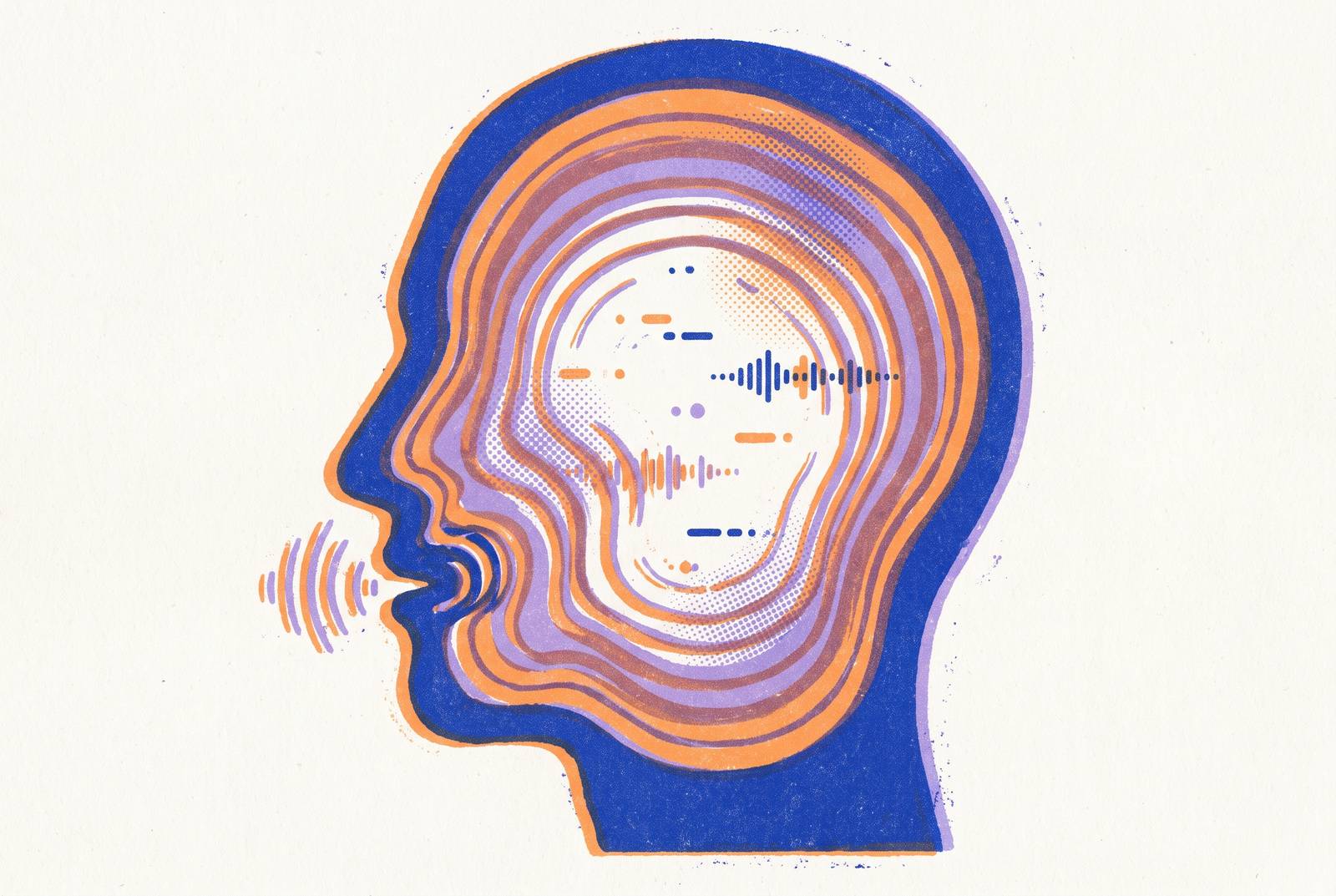
A voice journaling app that genuinely remembers you, across months, unprompted, is rarer than the marketing copy suggests. Most apps in this category are built to capture and transcribe; the ability to connect an entry recorded today with something said three months ago is the gap that keeps the practice from compounding into actual self-knowledge. The defining failure here is forgetting.
Forgetting happens at different depths, and the depth determines how far back an app can actually reach for a user. Session memory forgets the moment the app closes, holding nothing past the single conversation. Context-window memory does a bit better: it can reference recent entries, the last few days or weeks, but it has no real reach backward. Longitudinal memory is the only one of the three that recalls entries from months ago without being asked, complete with dates, and stitches them into something resembling a timeline of a person's inner life.
Only that third kind of memory can do the three things implied by any headline promising a voice journal that "knows you": name a recurring pattern, track whether a commitment got kept, and notice what someone has quietly stopped talking about. A user who talks into a capture-first app every day for a year ends up with a searchable transcript archive. That archive is real and genuinely useful for lookup. What it is missing is synthesis: the living, evolving portrait of who that person is becoming, built by a system actively designed to connect entries across time.
Why longitudinal memory is harder to build than it sounds
Building a system that remembers a person's inner life across months is a different engineering problem than building one that transcribes speech accurately, and conflating the two is where a lot of product claims go soft. Transcription and search are tractable. Memory that spans a year of daily disclosure is harder to build, and the difficulty appears in at least two distinct places.
The first is a raw data problem. A year of daily voice entries produces far more text than any language model can hold in a single context window, so the system has to make a retrieval decision: which past entries get pulled forward into the conversation, and which stay buried. That retrieval choice is, functionally, what the AI "remembers." Get the retrieval wrong and the AI's memory becomes selective in ways the user never signed up for.
The second is a relevance problem, and it is subtler. Not every past entry carries the same weight. A system that retrieves by keyword match will miss the slow emotional arc that unfolds without repeating the same words twice. A system that retrieves by recency will miss the entry from six months back, even when it still matters more than anything said last week. An academic proposal called Persode (arXiv:2508.20585) tackles exactly this by assigning long-term memories a strength score based on emotional intensity, recall frequency, and contextual relevance, borrowing from Ebbinghaus's Forgetting Curve to model how memories should decay over time. An automated machine review of that same work flagged that its engagement claims remain unevaluated and its memory-scoring formula unvalidated. This matters because it shows that even a researcher purpose-built to solve this problem has not yet proven the solution at scale. If the frontier of the field is still testing its own scoring formula, a consumer app's quiet claim to "remember everything" deserves a skeptical read.
There is also a timing dimension that marketing tends to flatten. The compounding that longitudinal memory promises is back-loaded. Week one gives an AI assistant only a handful of entries to draw from, barely enough for a pattern to exist, let alone be named. Month three gives it something meaningfully richer, a dataset with actual shape to it. An app that implies the full depth of that experience is available on day two is describing a script, not a memory.
What voice adds to the memory that text alone cannot
Granting that longitudinal memory is hard to build, a reasonable question follows: why insist on voice as the input at all, rather than just typing into a well-designed longitudinal text app? Voice carries information a transcript throws away. Pauses, pacing, hesitation, a tone shift mid-sentence: all of that lives in the audio record and disappears the moment it becomes flat text. Research in affective computing consistently finds that vocal prosody, the rhythm and pitch and emphasis of speech, carries emotional information that text alone does not preserve. An app whose analysis layer can draw on those signals has a richer substrate to detect patterns from than one working from typed words stripped of how they were said.
There is also a simpler, almost mechanical advantage. Speaking is considerably faster than typing on a phone, and that speed removes the lag between having a thought and getting it captured. Fewer seconds between impulse and recording means less time for the impulse to get edited down into something more presentable. Entries made this way tend to be fuller and less groomed, and a less curated entry is, on balance, a more honest one. A conversational voice journaling app like Joice removes the friction of composing on a phone keyboard. Entries tend to be more complete and less curated as a result, and less curated entries feed the most honest longitudinal patterns.
This connects to cognitive defusion, the process by which stepping back from a thought and treating it as a passing mental event, rather than a fact about the world, creates useful distance from it. That mechanism works whether the externalization happens on paper or out loud. Voice simply removes one extra piece of friction: the work of forming grammatical sentences while exhausted, which happens to be exactly when the most unguarded entries tend to get made. The foundational research behind expressive writing comes from James Pennebaker at the University of Texas at Austin, whose studies show measurable downstream effects on mood and stress physiology from putting difficult experience into words, with somewhat more conditional evidence for improvements in cognitive performance. Voice journaling inherits those same benefits while lowering the activation energy it takes to start.
But what if the AI on the other end of that voice entry is part of the problem? One might argue that the real risk in this category is not privacy, even though privacy gets most of the headlines. Sycophantic responses carry a behavioral risk: users learn, often without noticing, to journal in a way calibrated to get a warm response instead of staying honest about what is actually true. Practitioners with decades of journal-based work with clients report that most AI journaling apps respond in a sycophantic way, and a loop that validates instead of probing quietly degrades the honesty that makes journaling work as a practice in the first place. Life Note's own site quotes a licensed psychotherapist who contrasts that sycophantic pattern with an app he describes as striking a rare balance, offering support alongside thoughtful invitations to reflect. A company publishing a quote naming the failure mode its own competitors fall into is a sign that the industry itself recognizes this as a real problem.
The apps that handle it best share a few habits. They ask follow-up questions that build on what was just said. They surface what a user has avoided saying. And they use longitudinal memory to introduce friction, gently pointing out, for instance, that someone said the opposite three weeks earlier. An app that remembers does what has just been described, rather than merely performing remembering, and that standard carries into the comparisons that follow.
Joice: voice journaling built around the conversation, not the transcript
Joice approaches voice journaling as a guided conversation rather than a dictation booth, and that structural choice is what keeps it close to the standard just laid out. Joice offers conversational prompts that make a session feel like answering a question from someone curious rather than filling out a form, since research on expressive writing shows a blank page or blank recording prompt tends to produce thinner, more guarded entries. That structure makes it harder to perform for an audience when the audience is asking you something specific.
Speaking instead of typing removes the sentence-formation barrier at precisely the moment journaling sessions tend to get abandoned, on the exhausted or busy day when sitting down to compose a paragraph feels like one task too many. A conversational back-and-forth also produces more raw material to work with than a monologue of equal length would, since a question-and-answer exchange surfaces context that a straight recitation skips past. Joice is built voice-first and conversational by design. It is not a mood tracker bolted onto a chat interface, not an offline-only tool, and not a text-journaling app with a microphone icon added as an afterthought. That distinction shows whether the architecture underneath is actually suited to compounding into self-knowledge over a year, or just suited to storing a year's worth of audio.
Joice surfaces recurring patterns across entries by design, and its weekly reflections connect what someone said this week to themes that have built up over months, so the searchable transcript being built actually turns into something more than a collection of isolated captures. The fit here is clearest for people who think out loud more easily than they write, who find a blank page more intimidating than a blank phone call, and who want a journaling habit durable enough to survive the days when writing anything down feels impossible.
Other apps worth considering, matched to specific needs
No single architecture serves every journaling goal equally well, and several other apps make legitimate, different structural bets.
Know Your Ethos combines AI-powered voice journaling with Stoic principles through a personal "daimon," an AI mirror named for the ancient Greek concept of an inner voice of reason, and it builds what it calls an "Ethos profile" over time, mapping values, patterns, and growth. Its free tier includes daily check-ins, a Daimon response on every check-in, AI mood and feelings detection, and one Daimon conversation after three check-ins, with a Premium plan available monthly or annually. It runs on iOS and Android, with no web app. It suits people drawn to a philosophical framework who want their voice journaling aimed at values clarification rather than open emotional processing, though that same Stoic framing is a constraint for anyone who would rather journal without a philosophical lens attached.
Life Note pairs entries with AI mentors trained on the published writings of historical figures, including Aristotle, Carl Jung, Marcus Aurelius, and Viktor Frankl, so its responses can be traced to actual source text. Its Talk to Your Past Self feature resurfaces entries from weeks or months back and stages a dialogue between a user's past and present selves, which makes longitudinal memory visible as an actual feature rather than something happening invisibly in the background. It runs on web, iOS, and Android. It fits users who want their longitudinal memory expressed as a literal conversation with an earlier version of themselves, grounded in named philosophical voices.
Yaps takes the opposite approach to data: it is a voice-first, on-device journal where speech capture, cleanup, storage, search, and read-aloud all happen locally on the device, so nothing leaves the hardware by default. It detects roughly 25 languages from speech automatically, with no manual language setting required, and offers a seven-day free trial before any subscription begins. It runs on Android, iPhone, iPad, Windows, macOS, and Linux. It is the clear choice for anyone who treats privacy and offline capability as non-negotiable, with the honest trade-off that keeping everything on-device limits how deep the longitudinal AI analysis can get compared with a cloud-based system.
VoiceJournal, built by Asmina Dev for Android, takes voice entries and analyzes each one for primary emotions, mood intensity, and recurring life themes, generating weekly and monthly narrative recaps. It syncs with Health Connect to line up physical data, steps, heart rate, sleep, against emotional patterns, and its Visual Life Map renders emotional trends as interactive charts over time. It fits Android users who want that specific correlation between mood and body data and who do not mind an ad-supported app with in-app purchases. Its Google Play listing shows 50+ downloads, suggesting an early-stage install base, so how its longitudinal memory performs at real scale is still largely untested.
Claire supports voice journaling with follow-up questions, an About You profile that personalizes conversations with remembered details about a user's life, and weekly reports surfacing emotional themes. It also supports text messaging and hands-free voice through CarPlay, and its mobile app accepts photos sent by SMS. It runs on iOS and web, with Android listed as coming soon, and the mobile and web versions do not currently offer identical feature sets. It fits users who want structured scaffolding, morning and evening routines, reminders, around a journaling habit at a moderate daily volume.
None of these should be read as ranked against each other or against Joice. Each is making a different bet about what matters most, and prices and feature sets reflect each company's own documentation as of 2026, worth a fresh check before committing to any subscription.
How to choose based on what kind of memory you want
Reading through five different architectures can leave a reader more certain about the category and less certain about the actual decision. The resolution is simpler than it looks once the question gets reframed: not which app has the most features, but which kind of longitudinal memory matches the kind of self-knowledge being sought.
Anyone pursuing values clarification, building something closer to a personal philosophy over time, gets more out of an app with a defined reflective framework already built in. Anyone who wants the longitudinal dimension to feel like dialogue rather than algorithm, an explicit conversation with who they were months ago, will find that made literal in Life Note's Talk to Your Past Self feature, which some people find more emotionally legible than a pattern surfaced quietly in the background. Anyone for whom data privacy and offline access are simply non-negotiable has one real option: on-device processing, which is what Yaps guarantees, at the cost of some depth in longitudinal analysis compared to a cloud-based system. And anyone trying to correlate emotional state with physical and behavioral data, sleep, steps, heart rate, has a specific tool in VoiceJournal's Health Connect integration, though that is a narrow use case rather than a general substitute for the other approaches.
They produce it through accumulation, through the slow, unglamorous act of showing up again; the deciding factor for most people should not be which app has the cleverest memory architecture on paper, but which one is easy enough to actually keep using. A longitudinal memory system that never gets fed enough entries to find a pattern is just an empty database with good intentions.